Lonely places ranked: Low-traffic hiking in Missouri and Kansas

Smoky Hill Wildlife Area borders Kanopolis State Park, near Salina.
Want to get away from it all on the trails? Here’s where to go.
By Roy Harryman
Publisher
When you go hiking, do you like to get away from crowds?
Although I have no official polling data, my sense is that most hikers enjoy lonely places. We’re certainly not an anti-social or unfriendly bunch. It's hard to pass someone on the trail without a smile or at least a “hello.”
But part of the appeal of hiking is disconnecting from noise, stress and rush hour. If that’s your goal, then you’re in luck. Using publicly available data, I’ve compiled a list of the least-visited state parks in Missouri and Kansas. Just for comparison, the most-visited parks are also included.
And if you’re thinking about a long-distance trip, I’ve also researched the number of visitors to national parks in the lower 48 states.
A few notes about the data:
The latest comprehensive public data for Kansas is from 2022 (if there’s more current information, I’d love to update it).
For Missouri, historic sites and locations that aren’t oriented toward hiking have been removed from this data.
Kansas has fewer parks than Missouri (28 vs. 57), so instead of listing the top 10, I’ve listed the top 5.
Do you have favorite destinations not listed here? We’d love to hear from you.
Missouri state parks ranked by visitors
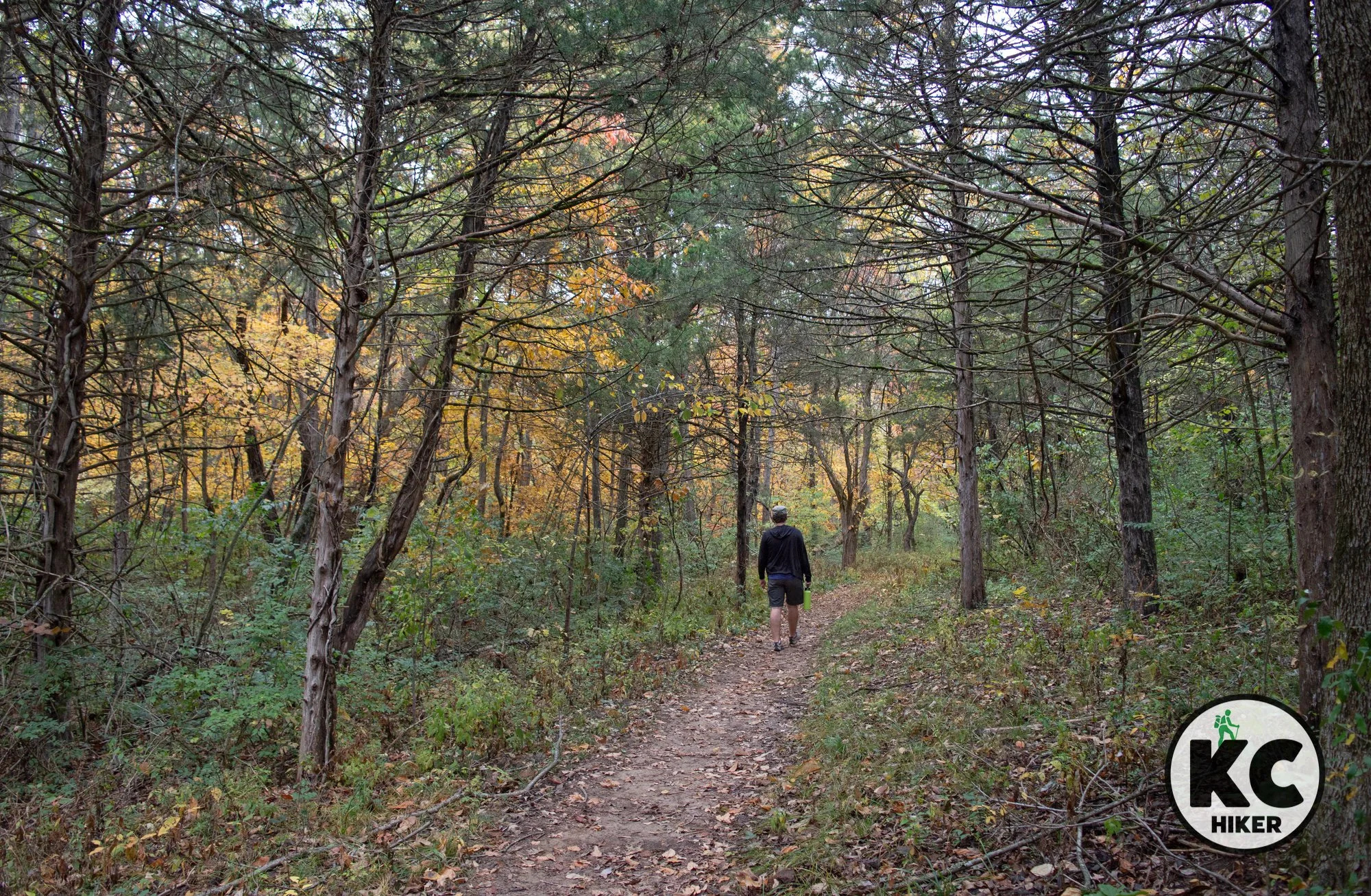
Clark’s Hill/Norton State Historic Site near Jefferson City, Mo., registered the fewest visitors in Missouri in 2025. But it’s definitely worth a visit, with a trail scaling bluffs between the Missouri and Osage rivers.
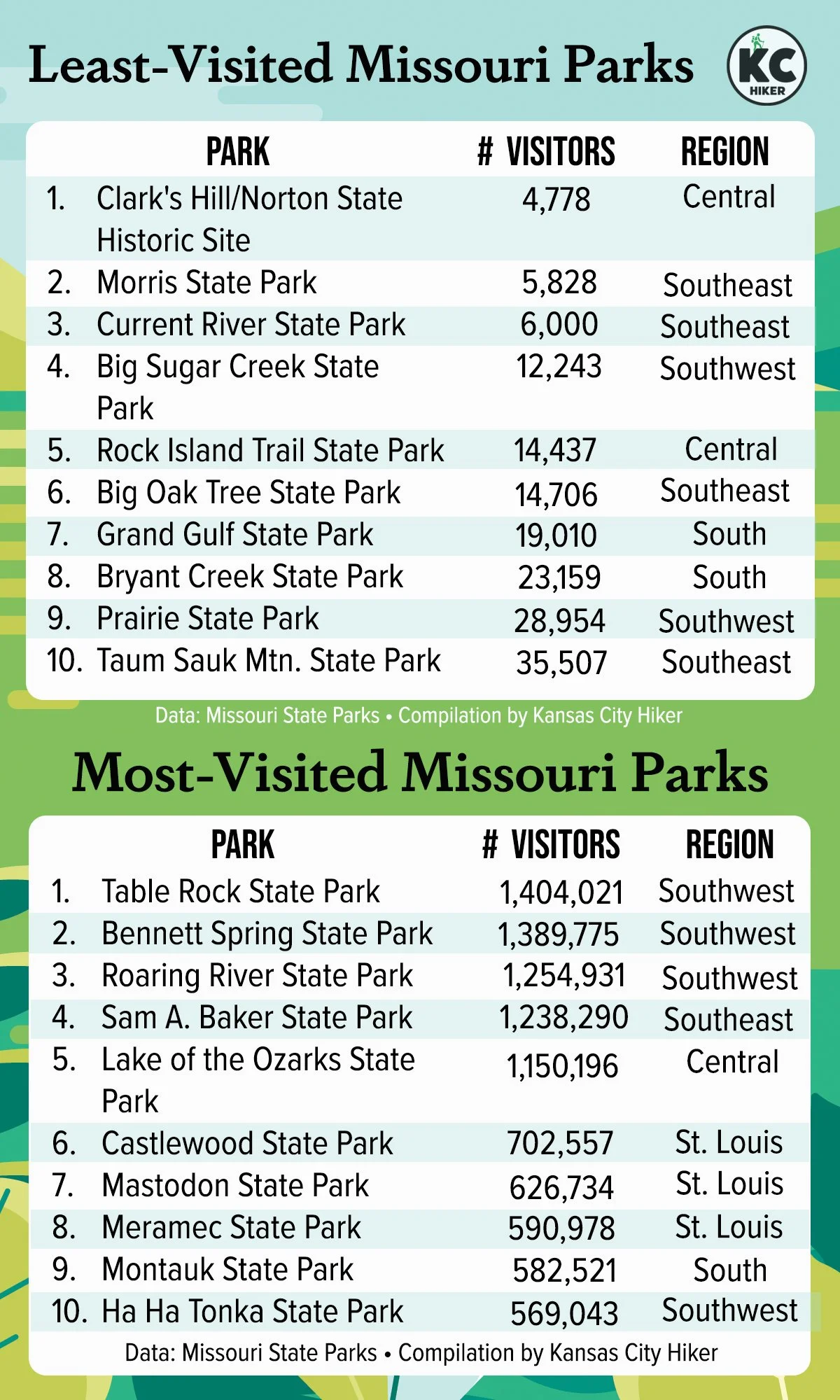
If you’re seeking solitude in Missouri, locations matter
The obvious takeaway is that destinations matter. Depending on where you choose to hike in Missouri, it could make a difference of 1.4 million visitors. In addition, fewer visitors don’t mean the location is inferior. For example, Missouri’s highest point is in Taum Sauk Mountain State Park. It’s an area of stunning, rugged beauty. However, the journey to get there is circuitous, requiring a five-hour drive from Kansas City over winding roadways. The location, known as Acadia Valley, is also rural and (fortunately) isn’t home to tourist traps as are found in the Branson area. It turns out that going off the beaten path can result in splendid horizons that you share with only a few hearty adventurers of kindred spirit.
However, even the busiest places thin out in the off season. Ha Ha Tonka State Park is visited by more than half a million people each year. But go in December and you’re almost guaranteed to have a quiet experience.
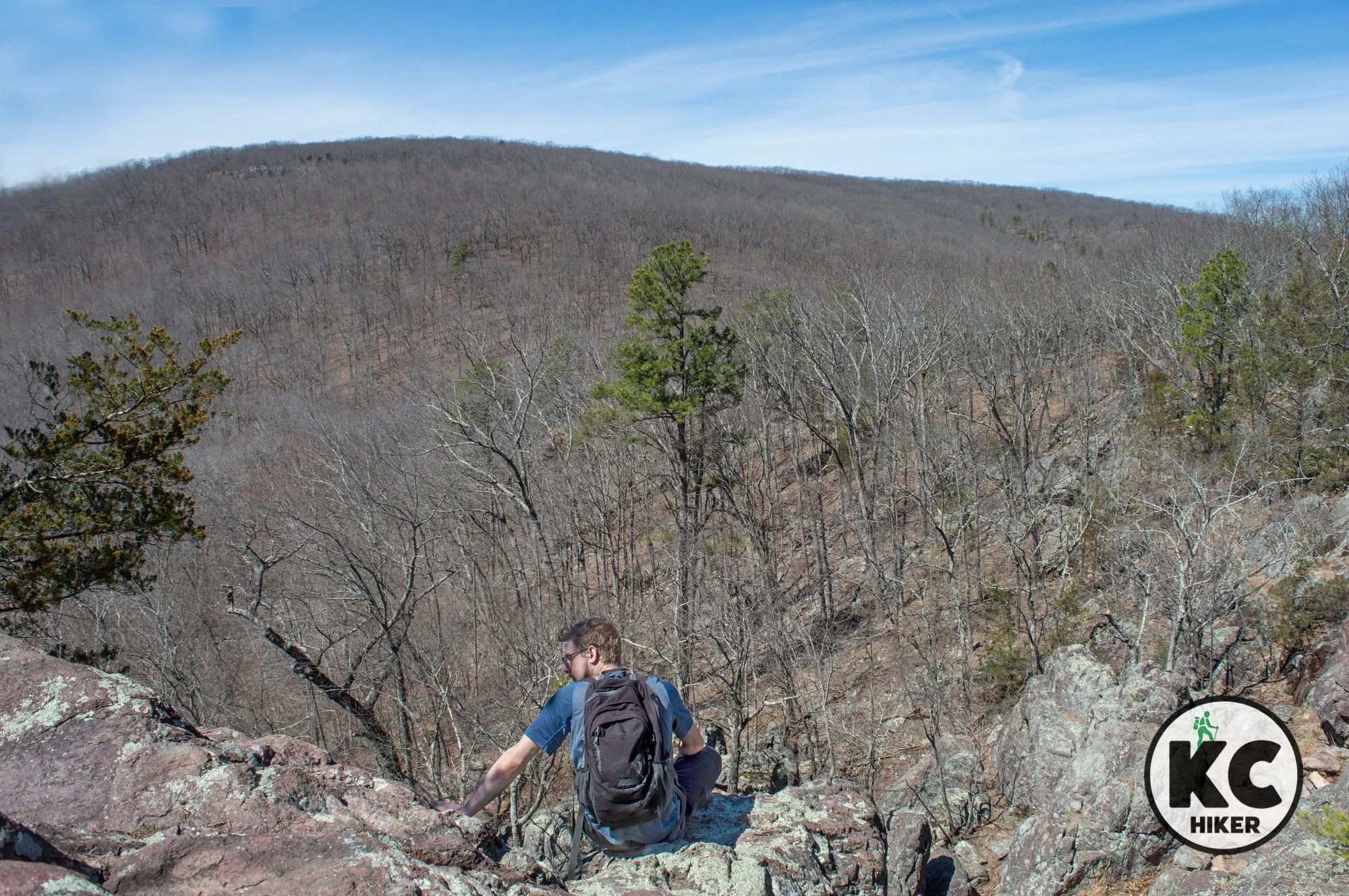
Taum Sauk Mountain State Park, near Ironton, Mo.
Kansas Parks ranked by visitors

The rugged beauty of Little Jerusalem Badlands State Park is seen by few because of its remote location in western Kansas.
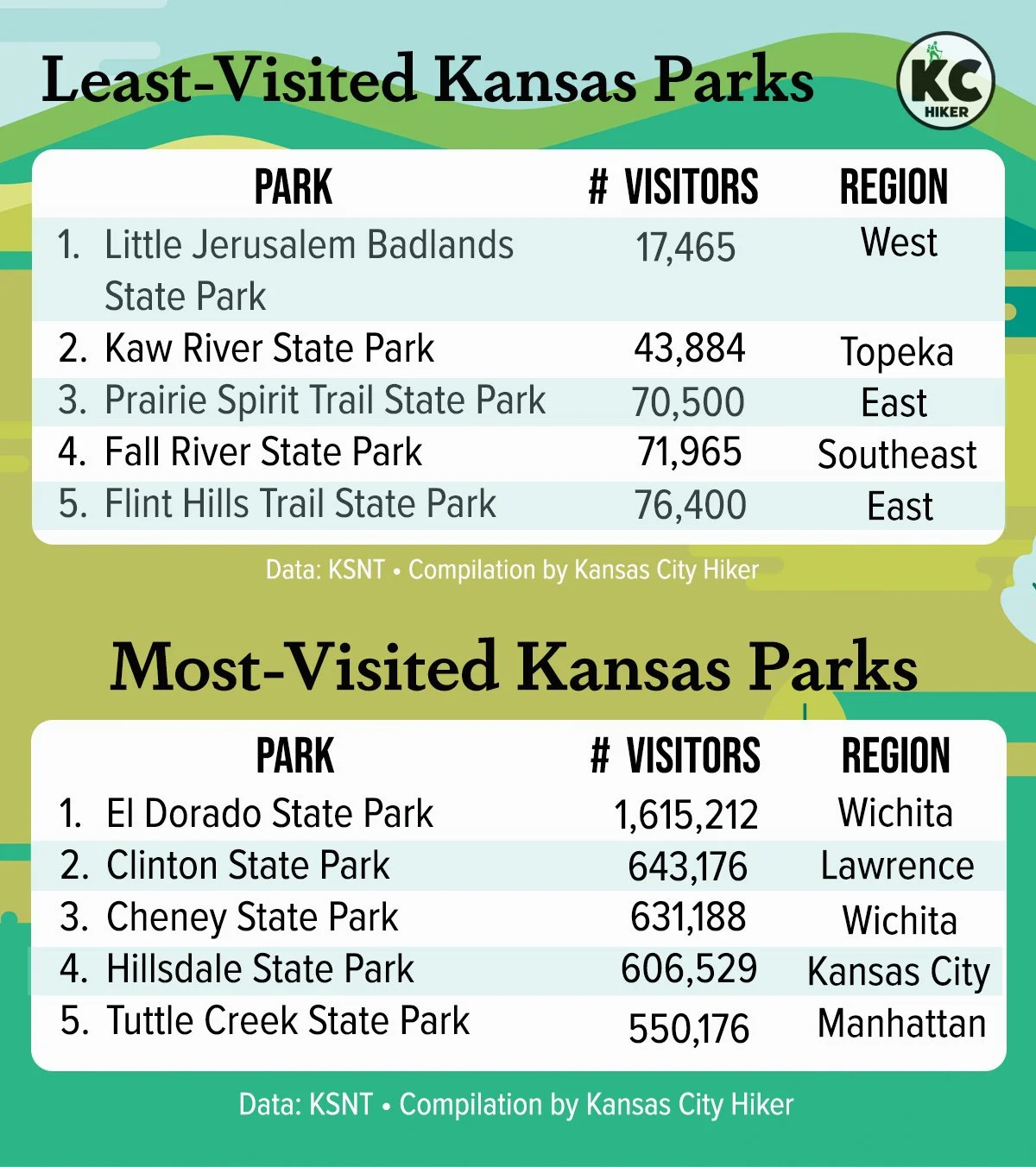
Little Jerusalem State Park will probably continue to be one of the state’s loneliest because of its distance from metro areas. It's a six-hour drive from KC. Topeka’s Kaw River State Park, on the other hand, is only an hour's drive. It, and the and adjacent MacLennan Park, offer 11 miles of natural surface trails through wooded bluffs and along the Kansas River. There’s also a paved and gravel trail that loops the prairie area in front of the governor’s mansion.
While Clinton Lake, in Lawrence, is a high-traffic destination, its trails are not necessarily as busy as the marina and other attractions. Clinton Lake trails include:
The Flint Hills Trail and Prairie Spirit Trail (both considered state parks) begin about an hour from Kansas City and are built upon former rail lines.
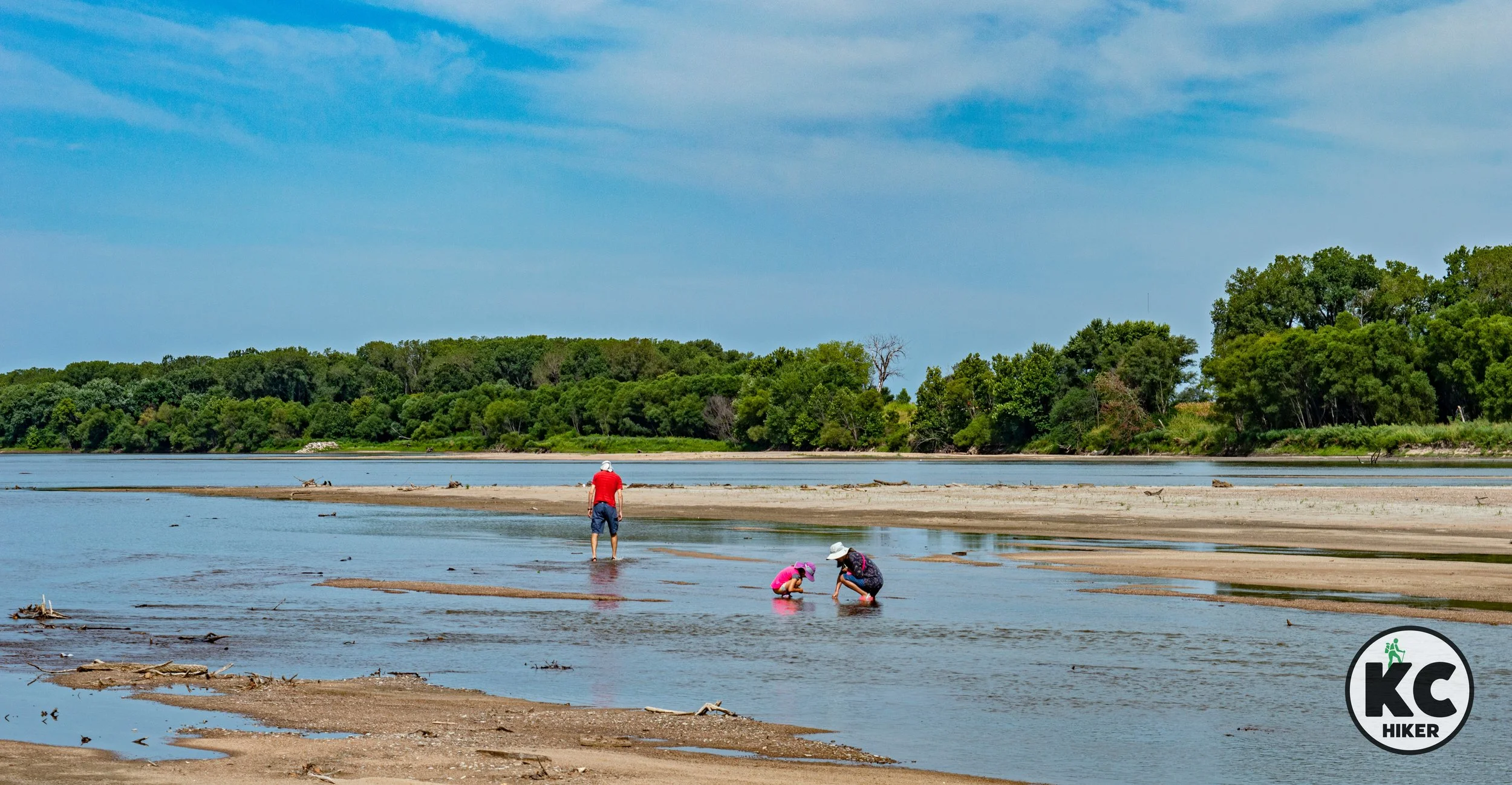
Kaw River State Park, in Topeka, Kansas, is home to the Midwest “beachfront” along this wide and shallow river.
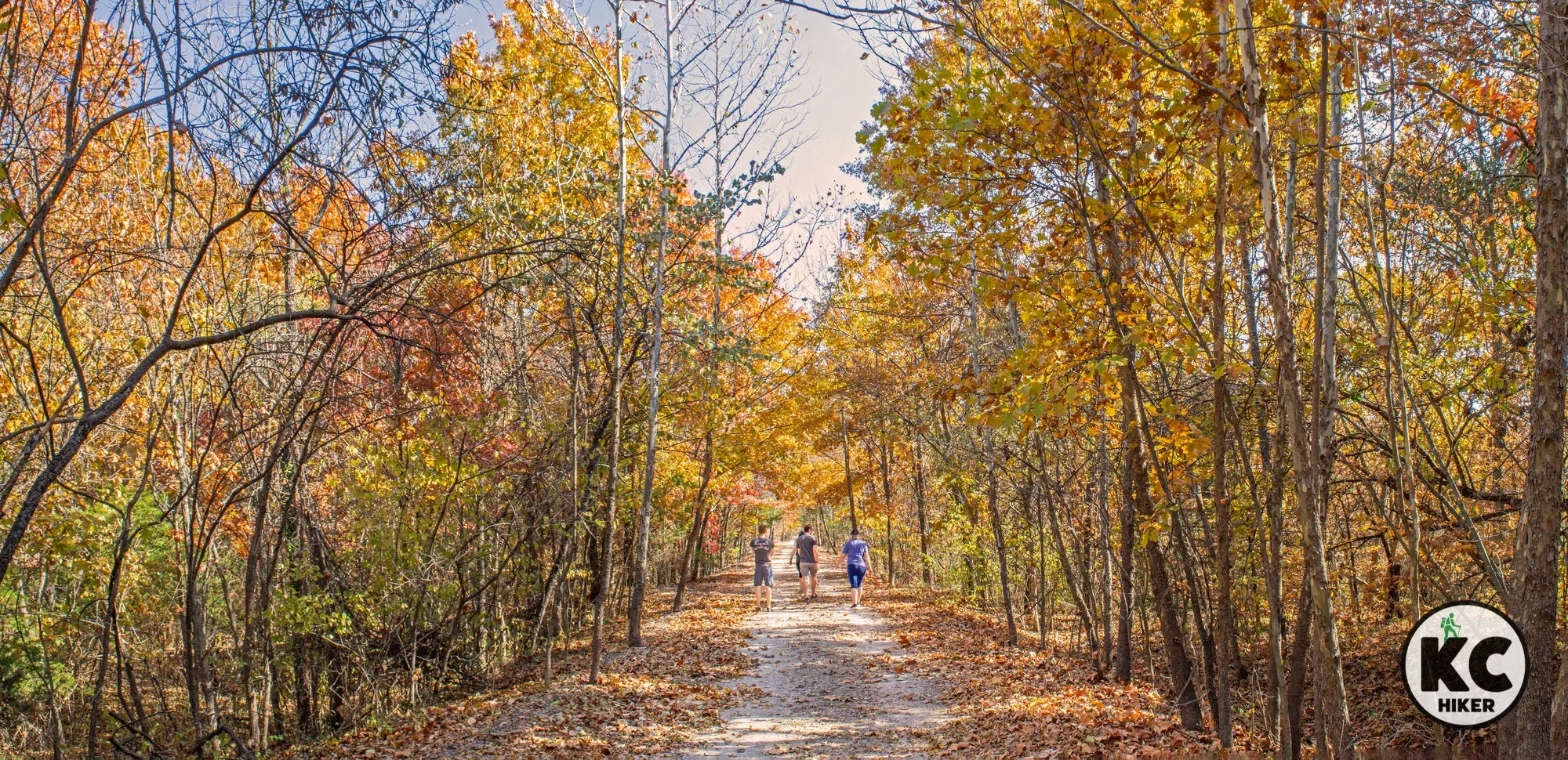
The Flint Hills Trail begins in Osawatomie, Kansas, offering more than 100 miles of solitude as it heads west to Council Grove.
Most and least-visited national parks

Isle Royale National Park, an island in Lake Superior, receives the fewest visitors of all national parks in the lower 48 states. It’s accessible only by ferry or sea plane.
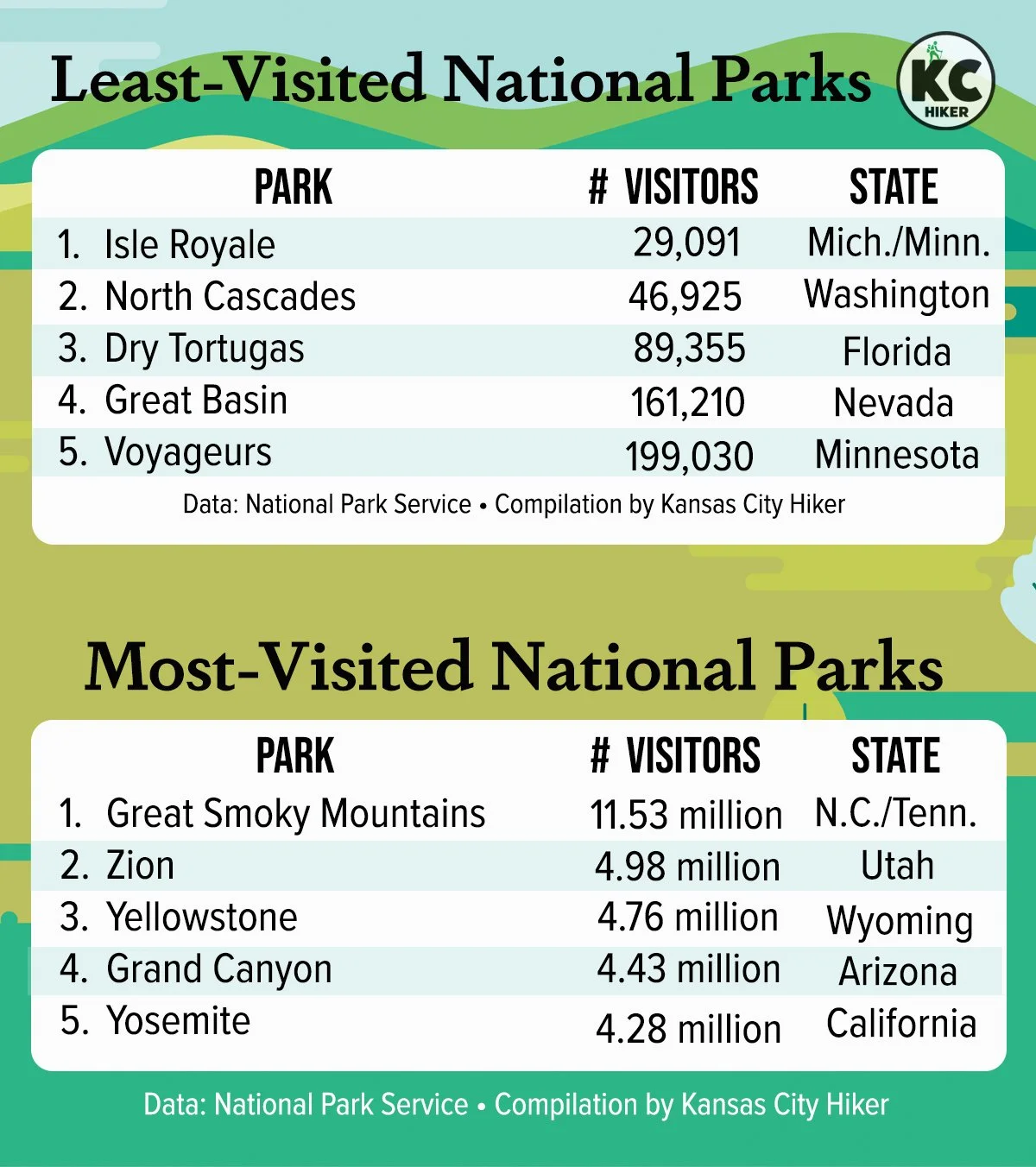
National Parks: Compete with millions of visitors or only a few thousand
Everyone can appreciate the Great Smoky Mountains, but 11 million visitors could turn it into the “Great Smoggy Mountains” – an LA traffic jam in Appalachia. In contrast, the least-visited national park in the lower 48 (Isle Royale) is a remote, mountainous island in Lake Superior only accessible by boat or sea plane. It's on my bucket list. There are national parks not listed here that receive fewer visitors, but I’ve omitted these because several are in Alaska or in U.S. Territories and are practically inaccessible to most people. Some of the Alaska locations are even roadless and require government permission to enter.
However, even the busiest parks have secluded areas. For example, the Grand Canyon’s North Rim receives significantly fewer visitors than the more popular South Rim. This is due to its remoteness – it takes six hours to reach the south from the north. The North Rim is significantly different, too. It’s 3,000 feet higher than much of the southern plateau and is covered in alpine forest.
Of course state and national parks represent only a small part of our area's hiking opportunities. Other ways to get off the grid – and fast – include Corps of Engineers land, Missouri Department of Conservation reserves and National Wildlife Refuges. Missouri is home to Mark Twain National Forest as well as state forests. Kansas is home to Tallgrass Prairie National Preserve and private reserves open to the public.
As you’ve read here, there’s no shortage of opportunities to get away from it all in Greater Kansas City. It may be as simple a matter as hitting that park down the street early in the morning.
Carpe diem!

Roy Harryman is the publisher of Kansas City Hiker and is always on the lookout for lonely and beautiful destinations.